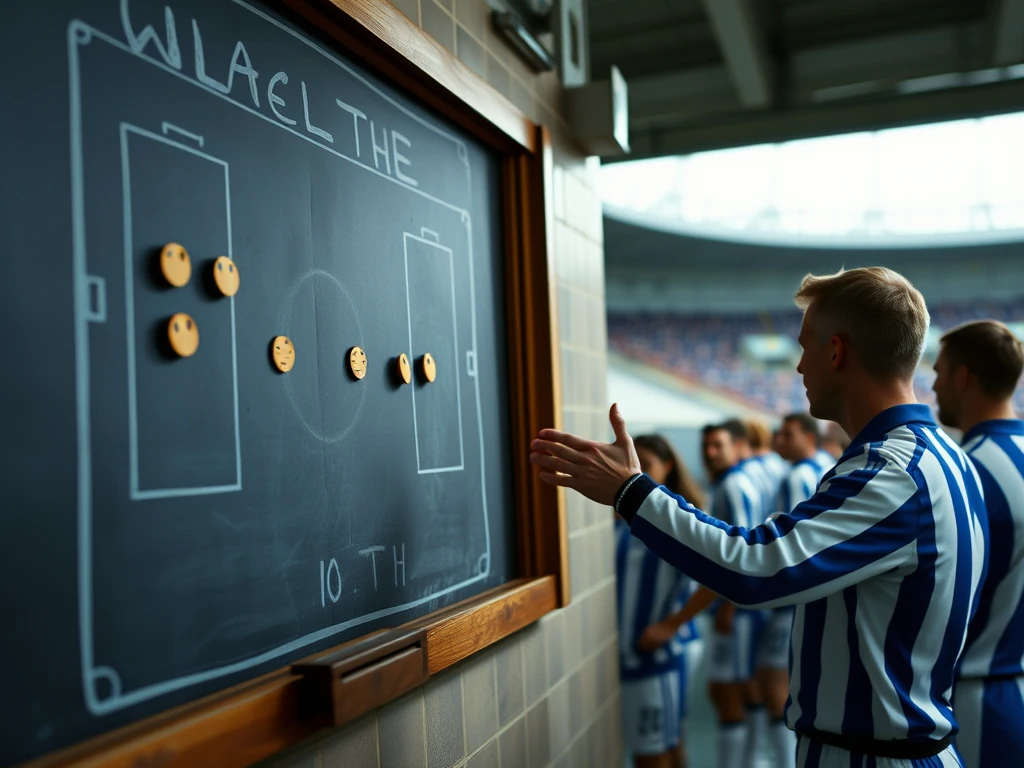

As Reading FC handles the challenges of League football, the team has demonstrated both promising play and frustrating inconsistencies. While the Royals have shown flashes of creativity in attack, defensive lapses and midfield imbalances have hindered their ability to secure points consistently. A tactical analysis of recent performances suggests that some strategic tweaks could help Reading harness their potential and raise their game in the upcoming fixtures.
Current Tactical Framework
Reading has primarily use a 4-2-3-1 formation, which has allowed them to maintain a solid defensive structure while providing a platform for attacking plays. The two holding midfielders are key in linking the defense and attack, but recent games have shown that this setup can become too rigid, especially against teams that press high. The forwards often find themselves isolated, leading to a lack of creativity and unpredictability in the final third.
Suggested Tweaks
To address these issues, a shift to a more fluid 4-3-3 formation could be beneficial. This would allow Reading to use their wide players more effectively, stretching the opposition and creating space for the central attackers. The three-man midfield would provide better support both defensively and offensively, ensuring that the team retains possession and can transition smoothly from defense to attack.
In this setup, one of the midfielders could play a more advanced role, acting as a link between the midfield and the attack. This player should ideally possess good vision and passing ability, capable of delivering incisive balls to the forwards. Alternatively, using an attacking midfielder who can drift wide would add an extra dimension to Reading's play, enabling overlaps from full-backs and creating mismatches against opposing defenses.
Defensive Adjustments
Defensively, the Royals have sometimes struggled with maintaining their shape during transitions. A more disciplined approach, perhaps through the introduction of a defensive midfielder who can screen the back four, would help in regaining possession quicker and reducing the defensive burden on the center-backs. This player should excel in breaking up opposition plays and distributing the ball effectively to launch counter-attacks.
Additionally, the full-backs need to be more dynamic in their positioning. Encouraging them to push higher up the pitch while ensuring that the wingers drop back to provide cover could create more width in attack. However, this needs to be balanced with caution, as it risks leaving space behind that could be exploited by fast counter-attacking teams.
Emphasizing Set Pieces
Another area where Reading could improve is in set-piece situations. The Royals have the height and physical presence to be a threat from corners and free-kicks, yet they have not capitalized on these opportunities as effectively as they could. Assigning dedicated roles for specific set-piece scenarios, including designated targets in the box and rehearsed routines, could lead to more goals from these situations, providing key advantages in tightly contested matches.
Conclusion
In summary, while Reading FC has shown potential in their recent performances, a few tactical adjustments could significantly enhance their effectiveness on the pitch. Transitioning to a more fluid 4-3-3 formation, adding a dynamic midfielder, ensuring defensive solidity during transitions, and maximizing set-piece opportunities are all strategies that could help the Royals climb the League table. By fine-tuning their approach, Reading can not only improve their game but also reignite the passion of their loyal fanbase as they chase success this season.